Monkey Christmas: A Playful Handwritten Display Font for Brand Identity
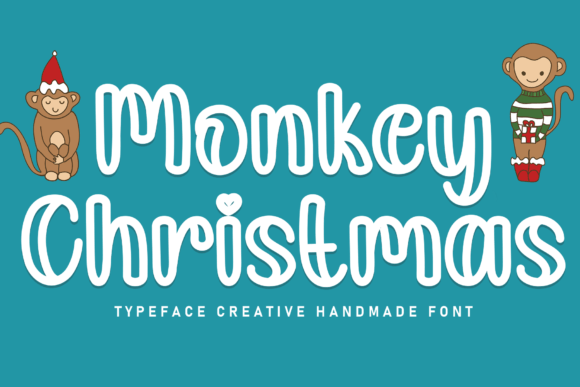
I remember staring at a blank brand board, the cursor blinking on a white canvas. The client was a boutique bakery looking to refresh their visual identity, and they wanted something that felt homemade yet professional. They didn't want sterile corporate minimalism; they wanted warmth, charm, and a touch of whimsy. That is when I decided to test Monkey Christmas. It is a sweet and friendly handwritten display font from Script Amp that immediately caught my eye. I dropped it into the logo concept area, expecting it might feel too chaotic or juvenile, but instead, it brought an instant sense of joy to the layout.
This font isn't just another decorative typeface you download and forget about. In my testing across various design assets, from packaging mockups to social media graphics, Monkey Christmas proved to be a versatile creative font that balances playfulness with readability. Whether you are working on wedding invitations, cards, or a full commercial brand identity, this typeface offers a distinct personality that stands out without screaming for attention.
First Impressions in Real-World Branding Projects
The moment I placed Monkey Christmas on a business card draft for a handmade shop, the vibe shifted instantly. The letterforms have a natural flow that mimics actual handwriting but retains enough structure to remain legible. Unlike many script fonts that become unreadable when scaled down, this one maintains its character even at smaller sizes. The strokes vary in thickness just enough to create visual interest, giving the text a hand-drawn quality that feels authentic rather than digitally forced.
I also tested it on a product label for a skincare line. Usually, organic brands lean heavily toward serif fonts to convey purity, but the client wanted something more approachable. Monkey Christmas worked beautifully as a headline font here. It sat comfortably alongside a clean sans serif font for the ingredient list, creating a perfect harmony between modern typography and rustic charm. The font's ability to act as both a decorative element and a functional headline makes it a powerful tool in your design assets library.
Logo Design and Visual Hierarchy
When designing a logo, every pixel counts. Monkey Christmas excels as a logo font for businesses that want to project friendliness and creativity. I used it to draft a concept for a local café, and the result was inviting and memorable. The playful nature of the letters helps establish an immediate emotional connection with the audience. However, it is crucial to understand where this font fits in your visual hierarchy.
While it is fantastic for short phrases, titles, and key messages, it should generally not be used for long body text. The variable stroke widths and unique flourishes can make reading dense paragraphs difficult and tiring for the eyes. For a complete brand identity, I recommend using Monkey Christmas for headlines, logos, and accents, while pairing it with a highly readable serif font or a neutral sans serif font for supporting content. This combination ensures that your brand looks professional and polished while retaining its fun spirit.
Applications Beyond the Logo
The versatility of Monkey Christmas extends far beyond a single logo mark. I found myself reaching for it repeatedly during a week-long project involving editorial design for a lifestyle magazine feature. The font added a personal touch to pull quotes and section headers, breaking up the monotony of standard text blocks. Its handwritten style suggests a human touch, which is invaluable for content creators and bloggers who want to build a genuine relationship with their readers.
- Packaging Design: On a box for artisanal cookies, the font made the product look like a labor of love. It elevates the perceived value by suggesting care and attention to detail.
- Social Media Graphics: When creating Instagram posts or Pinterest pins, Monkey Christmas grabs attention in the feed. Its bold, display characteristics work well against solid backgrounds or soft gradients.
- Web Design: I tested it on a homepage hero section for a creative studio. It served as an excellent display font, drawing visitors in immediately before guiding them to cleaner navigation menus.
- Print Collateral: From flyers to posters, the font holds up well in print. The contrast in the strokes translates clearly on paper, making it ideal for event invites and promotional materials.
Font Pairing Strategies
One of the most common questions I get is how to pair a display font like Monkey Christmas. The golden rule is balance. Since this font is busy and expressive, it needs a calm partner. A classic serif font works wonders here, providing a structured foundation that grounds the whimsical nature of the script. Alternatively, a geometric sans serif font can create a modern contrast that feels fresh and dynamic.
For instance, in a branding project for a children's clothing line, I paired Monkey Christmas with a simple, rounded sans serif. The result was cohesive and age-appropriate. The script handled the fun, colorful aspects of the brand, while the sans serif ensured that pricing, sizing, and descriptions were crystal clear. If you are working on a wedding invitation suite, pairing it with an elegant serif font can add a touch of sophistication to the otherwise cute design.
Practical Considerations and Limitations
While Monkey Christmas is a delightful addition to any designer's toolkit, it is not a universal solution. There are specific scenarios where this font simply does not fit. If you are designing for a formal corporate environment, such as a law firm or a financial institution, the playful nature of Monkey Christmas might undermine the seriousness of the brand. Similarly, for projects requiring high levels of accessibility or small print, the intricate details of the handwritten style could hinder readability.
Before committing to this font for a final client project, I always advise testing it thoroughly. Try setting it in different weights (if available), check the kerning on your specific text, and see how it looks in black and white versus color. Review the included styles, alternates, and ligatures to ensure you have the necessary characters for multilingual support if your client operates globally. Most importantly, verify the file formats and webfont availability to ensure smooth implementation across digital platforms.
It is also vital to review the commercial font licensing terms carefully. Using a premium font in a client's brand identity, packaging, or merchandise requires the appropriate license. Always check if the license covers the specific use cases you have in mind, such as print-on-demand products, templates, or digital products. Failing to secure the correct rights can lead to legal issues later on.
Final Thoughts on Creative Potential
In the end, Monkey Christmas is more than just a cute font; it is a strategic design choice that can elevate a brand's personality. It brings a human element to digital and print media, fostering engagement and recognition. Whether you are a freelancer crafting a custom logo, a marketer designing a campaign, or a small business owner building your own brand, this typeface offers a reliable way to inject fun and warmth into your work. By understanding its strengths and limitations, you can leverage Monkey Christmas to create designs that are not only visually appealing but also effective in communicating your message.